
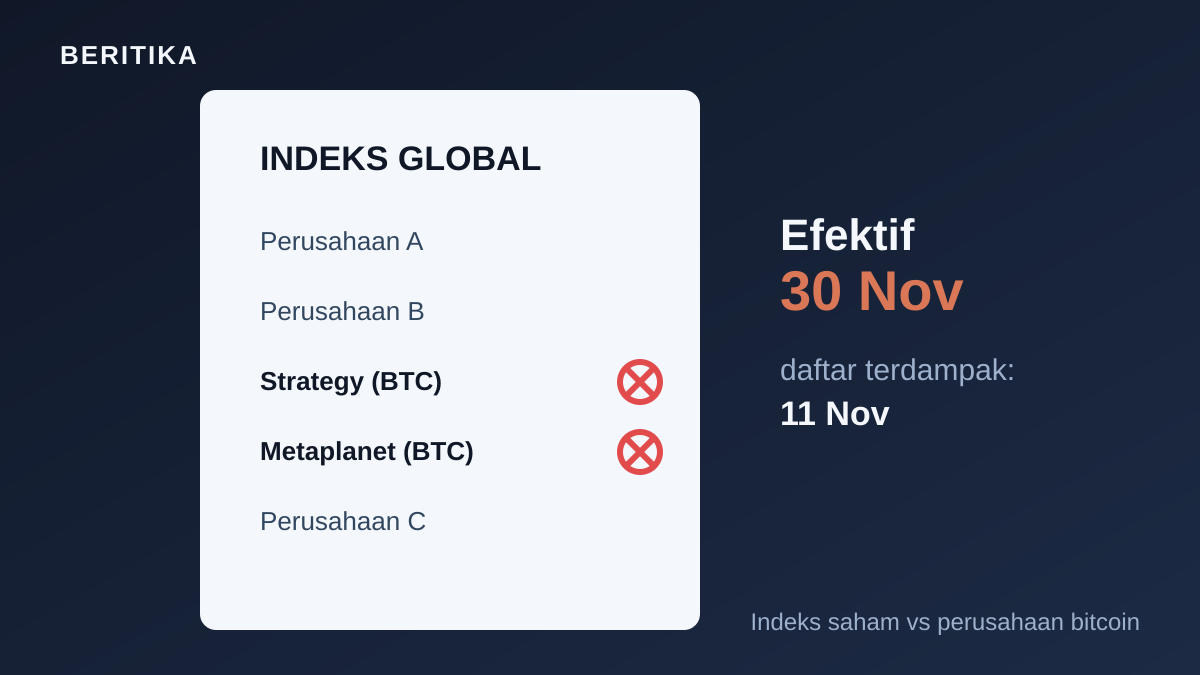
MSCI, the index provider most widely tracked by the world’s investment funds, has finalized a methodology change that threatens to remove bitcoin-treasury companies from its equity indexes. In an announcement dated 15 October, the Global Investable Market Indexes (GIMI) will treat “non-operating companies” as ineligible — effective at the close of trading on 30 November, as reported by Decrypt and Bitcoin Magazine.
The new methodology screens for corporate issuers that lack substantial operating assets and behave more like passive investment vehicles than real businesses — using a core screen plus a five-ratio exclusion test. Its clear targets: companies whose balance sheets are dominated by a single asset, such as Strategy (the world’s largest corporate bitcoin holder) and Metaplanet. The change also scraps a temporary 2025 reprieve for firms with over 50 percent digital-asset holdings. The list of affected companies arrives on 11 November.
The stakes are high: if Strategy is removed, index-tracking funds could be forced to sell its shares — cutting off one of the largest sources of passive demand. Strategy CEO Michael Saylor’s response was sharp: he called the rule “discriminatory”, and other reporting suggests he downplays its impact on his company.
For Indonesian readers, this case shows how Wall Street is institutionally re-categorizing “bitcoin companies”. The future of the crypto-treasury business model now depends not only on bitcoin’s price — but on the gatekeepers of the indexes.