
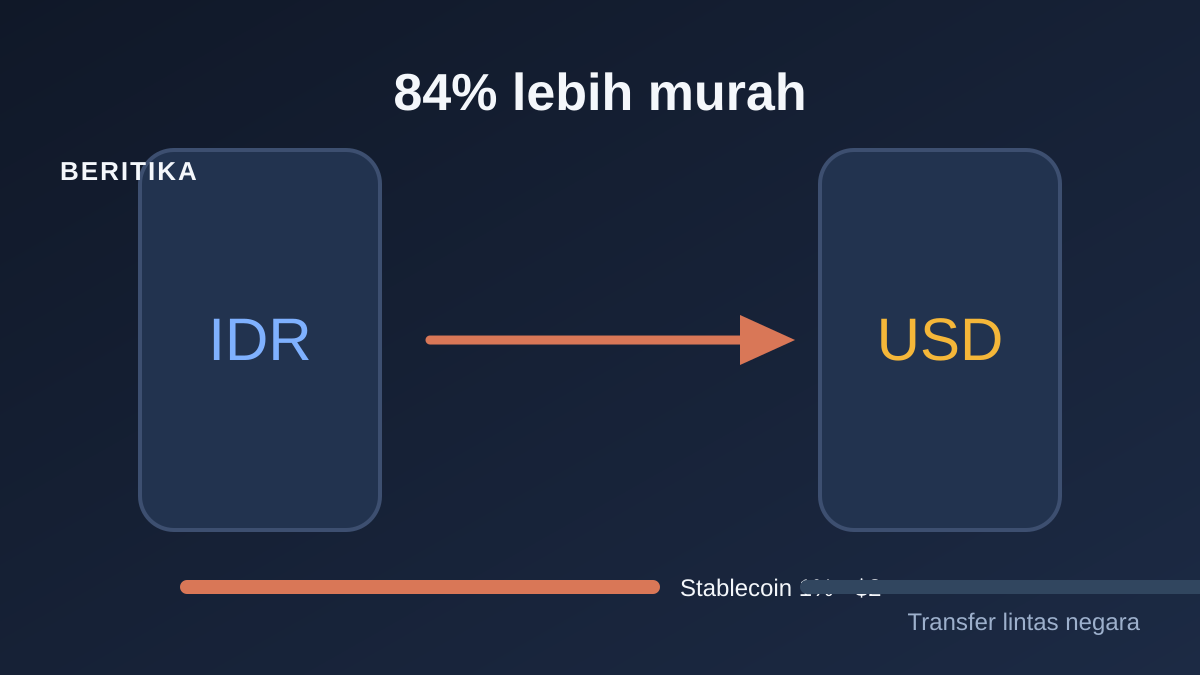
Sending money abroad via stablecoin now costs a median of just 1 percent — versus 6.36 percent on traditional remittance rails. That is the finding of Borderless.xyz’s Q3 report, analyzed by Cointelegraph: for a 200-dollar transfer, that means 2 dollars versus 12.72 dollars — a gap making stablecoin rails roughly 84 percent cheaper.
Savings run deepest in emerging markets. In Sub-Saharan Africa, stablecoin-funded remittances cost 2.9 percent versus 8.46 percent traditional; in Latin America, 1.25 percent versus 5.64 percent. Business payments benefit too: a 10,000-dollar transfer to the eurozone can cost as little as 26 dollars via the cheapest provider versus a median of 52 on conventional rails — and stablecoin settlement is far faster than international bank wires.
But the picture is not uniform. A Bank of Italy study, also reported by Cointelegraph, found no consistent cost advantage for stablecoin remittances — outcomes depend heavily on the provider, corridor, and destination country. There is also a methodological caveat: Borderless’s comparison matches its Q3 2026 pricing against World Bank data from the same period in 2025.
For the millions of Indonesian migrant workers sending remittances home, the practical takeaway: stablecoins do offer large potential savings, but compare real costs across providers first — the “84 percent cheaper” claim holds at the median, not on every corridor.